
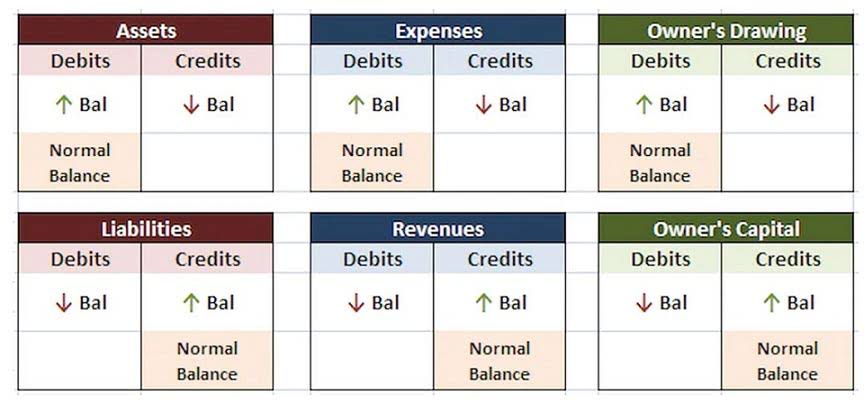
Liabilities (on the right of the equation, the credit side) have a Normal Credit Balance. Equity (what a company owes to Financial Forecasting For Startups its owner(s)) is on the right side of the Accounting Equation.
4 Rules of Debit (DR) and Credit (CR)
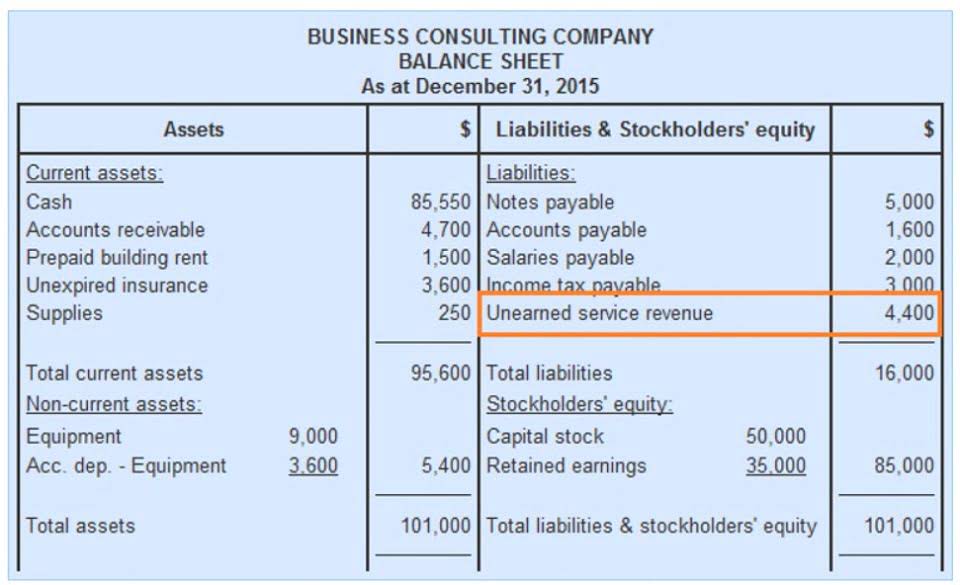
It’s the column we would expect to see the account balance show up. This classification is based on the account’s role in the financial statements and ensures that financial transactions are recorded correctly. In the intricate world of accounting, mastering the basics is crucial for https://www.bookstime.com/ maintaining accurate financial records.
Financial Statements
Assume he bought the computers with cash and his starting cash account had $25,000 in it. The rest of the accounts to the right of the Beginning Equity amount, are either going to increase or decrease owner’s equity. Another common sales discount is “2% 10/Net 30” terms, which allows a 2% discount for paying within 10 days of the invoice date, or paying in 30 days. Here, you’re increasing your Cash account (debit) and decreasing your Accounts Receivable (credit) since the customer no longer owes you money.
Normal Balance and the Accounting Equation

In this article, we explored the definition of normal balance and its significance in accounting. We discussed examples of normal balances for different types of accounts, including assets, liabilities, equity, revenues, and expenses. Understanding the relationship between normal balances and the categories of assets, liabilities, and equity is crucial for maintaining balance in the accounting system. A contra account contains a normal balance that is the reverse of the normal balance for that class of account. The contra accounts noted in the preceding table are usually set up as reserve accounts against declines in the usual balance in the accounts with which they are paired.

Revenues and gains are recorded in accounts such as Sales, Service Revenues, Interest Revenues (or Interest Income), and Gain on Sale of Assets. These accounts normally have credit balances that are increased with a credit entry. Debits and credits are terms sales normal balance used by bookkeepers and accountants when recording transactions in the accounting records. The amount in every transaction must be entered in one account as a debit (left side of the account) and in another account as a credit (right side of the account).
- Routine reconciliation of subsidiary ledgers, periodic trial balances and the use of accounting software that has built-in validation rules can help identify and correct such missteps.
- A cash account is an expected normal balance account that includes cash and cash equivalents.
- The opposite of the revenue contra accounts Sales Discounts, Returns and Allowances are expense contra accounts Purchase Discounts, Returns and Allowances.
- The term cost of sales is more likely to be used by manufacturers.
- They guide accountants and bookkeepers in journalizing financial transactions and updating ledger accounts of their business entity.
- The cost of sales is an expense account on the income statement and as such will increase by debit and decrease by credit.